

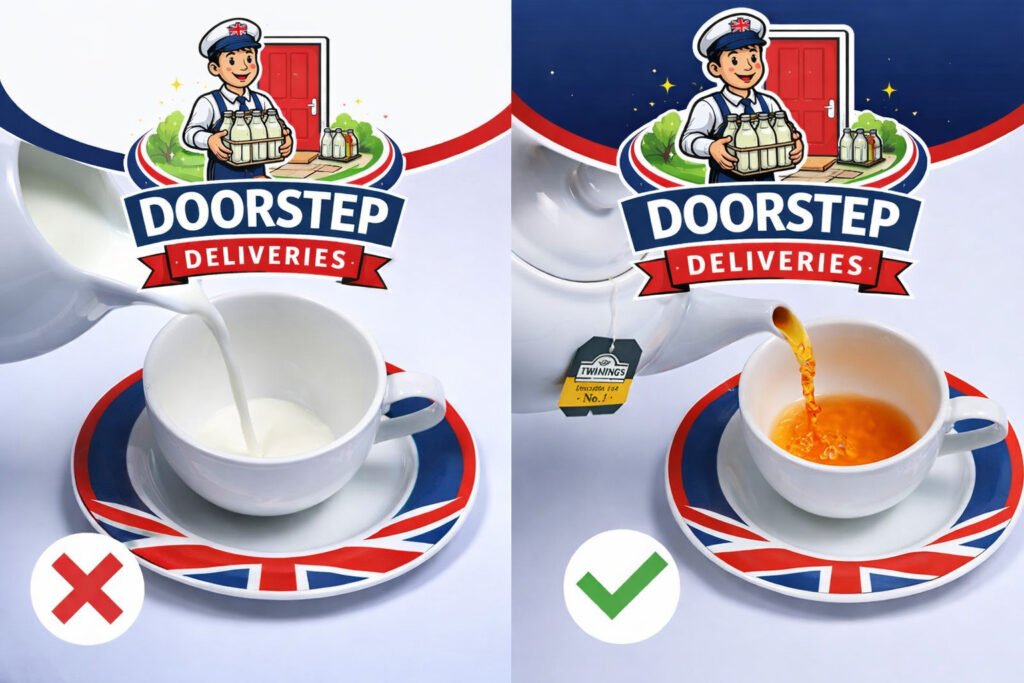
The Great Tea and Coffee Debate
For such a simple splash of dairy, the question of when to add milk to tea or coffee has divided households, baffled etiquette experts, and even sparked scientific studies.
Should milk go in before the hot drink is poured, or after? Is there really a “right” way, or is it just a matter of taste?
Let’s dive into the history, the science, and the cultural quirks behind one of Britain’s most enduring beverage debates.
A Matter of History
The tradition of adding milk to tea and coffee stretches back centuries. In 17th and 18th century Britain, tea was served in fine bone china cups. These delicate cups had a tendency to crack when boiling hot water or tea was poured in directly. The solution? Put the milk in first. By cushioning the temperature, the milk helped prevent the china from breaking.
Over time, sturdier porcelain and pottery replaced fragile cups, and the need for “milk first” faded. But by then, the practice had become a habit – one that stuck in some families and vanished in others. What started as a purely practical step became a question of tradition and identity.
Etiquette and Class Clues
Believe it or not, the milk debate once carried class associations. Some social historians argue that wealthy households with expensive china were more likely to put milk in first (to protect their cups), while working-class families with robust mugs could afford to pour tea first. That subtle difference may have helped entrench “milk first” as a mark of refinement in some circles.
Modern etiquette, however, tends to disagree. Debrett’s, the gold standard of British manners, advises tea first, milk after. Why? Because it allows the drinker to judge the exact colour and strength of the brew before adjusting with milk. After all, nobody likes a cup that’s too weak or too milky.
The Science Behind the Sip
This isn’t just about etiquette – there’s chemistry at play too.
- Milk first: When hot liquid hits cold milk, the proteins in the milk can scald slightly, affecting flavour. By putting milk in first, the hot tea or coffee warms the milk more gently, which some scientists argue results in a smoother taste.
- Milk after: Adding milk later means it’s exposed to higher heat, which may change flavour slightly – but it also allows far more control over the end result.
The Royal Society of Chemistry once weighed in on the issue, suggesting that scientifically, milk first is better for flavour preservation. Yet even they admitted that in practice, most people go the other way because it’s easier to control colour and strength.
Tea v Coffee: Does It Change the Rule?
While tea drinkers are used to the milk debate, coffee lovers have their own rituals. Flat whites, lattes, and cappuccinos all rely on milk, but baristas always add milk after the espresso shot. The reason is simple: you wouldn’t pour espresso into cold milk because it dilutes the crema and changes the flavour balance.
For black filter coffee, though, some people still go “milk first,” claiming it prevents bitterness. In reality, much like tea, it comes down to habit. Specialty coffee culture leans strongly towards milk after, while more traditional drinkers – particularly in the UK – may prefer milk first in their morning mug.
What the Public Really Does
Polls show that the vast majority of people today add milk after. A YouGov survey found that around 79 per cent of Brits pour milk into their tea after the brew, while only about 20 per cent put it in first. In coffee, the trend is even clearer – with milk first almost vanishing outside of instant coffee drinkers.
That said, milk-first diehards remain passionate. On forums and social media, you’ll find strong opinions defending the method for its texture, flavour, or simply because “it’s the way I was brought up.”
So, Which Way Is Right?
The truth is, there isn’t a single correct answer. Each method has its advantages:
- Milk first:
- Historically accurate for delicate china
- Scientifically smoother taste (less risk of scalding milk proteins)
- Maintains a traditional feel
- Milk after:
- Recommended by etiquette experts
- Easier to control strength and colour
- Matches modern coffeehouse culture
If you want the “proper” answer for formal occasions, etiquette says: tea first, milk after. If you’re brewing at home and prefer the smoother taste of milk first, that’s your call – and you’re in good company with centuries of tradition.
Final Pour
In the end, whether you’re sipping a builder’s brew or a carefully poured flat white, the “milk first or milk after” debate is more about personal identity than strict rules. It’s a question of habit, heritage, and the little rituals that make a cup of tea or coffee your own.
So next time someone challenges your technique, you can tell them you’re backed by history and science – whichever side you’re on. After all, the best cup is the one you enjoy.
Feeling thirsty? Order fresh milk to your home or office today with Doorstep Deliveries and our milk delivery service.